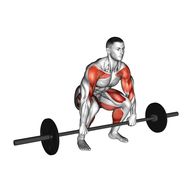
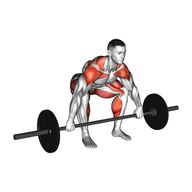
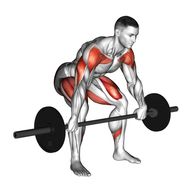
Barbell Snatch
Muscle Groups: Back
Barbell Snatch focuses on Back, with Abs, Biceps, Hamstrings, Lower Back, Traps, Triceps, Calves, Adductors working as supporting muscles.
How to Perform
Follow these step-by-step instructions to perform Barbell Snatch with proper form and technique.
- 1
Stand with your feet hip-width apart, shins close to the barbell, and the bar over your mid-foot.
- 2
Hinge at your hips and grasp the barbell with a wide snatch grip, hands outside your shoulders.
- 3
Keep your chest up, back flat, and shoulders slightly in front of the bar.
- 4
Initiate the lift by extending your knees and hips simultaneously, pulling the bar off the floor while keeping it close to your body.
- 5
As the bar passes your knees, powerfully extend your hips, knees, and ankles, shrugging your shoulders forcefully.
- 6
Pull the bar upwards as high as possible, keeping your elbows high and out.
- 7
Rapidly drop under the bar into a full squat position, extending your arms overhead to catch the bar in a stable overhead squat.
- 8
Drive through your heels to stand up from the squat, maintaining the barbell in the overhead position.
- 9
Control the barbell back down to the floor by reversing the movement.
Secondary Muscles
While Barbell Snatch primarily targets Back , this exercise also activates several secondary muscle groups during the movement. These supporting muscles include Abs, Biceps, Hamstrings, Lower Back, Traps, Triceps, Calves, Adductors . Engaging these secondary muscles helps stabilize your body throughout the exercise, improves overall coordination, and contributes to balanced muscle development.
Related Exercises
If you enjoyed Barbell Snatch, you might also want to try these related exercises that target similar muscle groups.
These exercises work the same primary muscles as Barbell Snatch, making them excellent alternatives for variety in your training program or complementary movements to include in the same workout session. Mixing different exercises that target similar muscle groups helps prevent plateaus, reduces overuse injuries, and keeps your workouts engaging and effective.