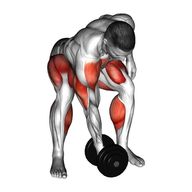
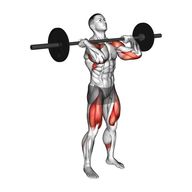
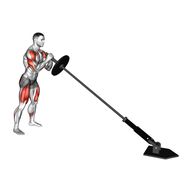
Squat Clean and Jerk
- Primary muscles
- Quads, Shoulders, Traps
- Secondary muscles
- Glutes, Triceps, Hamstrings
- Equipment
- Barbell
- Movement pattern
- Squat
Steps
- 1 Stand with your feet shoulder-width apart, squat down, and grasp the barbell with a wide overhand grip.
- 2 Ensure the barbell is positioned over the middle of your feet, with your chest up and back straight.
- 3 Explosively extend your hips and knees to pull the barbell off the floor, keeping it close to your body.
- 4 As the barbell reaches your waist, pull yourself under it, rotating your elbows forward to catch the barbell in a front rack position across your shoulders.
- 5 From the front rack, perform a shallow dip by bending your knees slightly.
- 6 Immediately drive through your heels, extending your legs and pressing the barbell overhead while simultaneously splitting your legs into a lunge position.
- 7 Once the barbell is locked out overhead, bring your feet together to stand tall, maintaining the barbell overhead.
- 8 Lower the barbell from the overhead position back to the front rack across your shoulders.
- 9 Control the barbell as you lower it from the front rack position back to the floor, reversing the clean movement.