Barbell Burpee

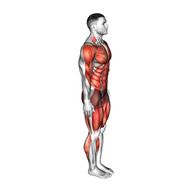
Muscle Groups: Quads, Hamstrings, Glutes, Traps, Shoulders, Abs, Chest, Calves, Hips

Barbell Burpee focuses on Quads, Hamstrings, Glutes, Traps, Shoulders, Abs, Chest, Calves, Hips, with Traps, Biceps, Forearm, Lower Back, Triceps working as supporting muscles.

How to Perform

Follow these step-by-step instructions to perform Barbell Burpee with proper form and technique.

  1. 1

    Stand with your feet shoulder-width apart, facing a loaded barbell on the floor.

  2. 2

    Hinge at your hips and bend your knees to grab the barbell with an overhand grip, hands slightly wider than shoulder-width.

  3. 3

    Keeping your grip on the barbell, jump your feet back into a high plank position, maintaining a straight line from head to heels.

  4. 4

    Perform a push-up by lowering your chest towards the floor, then push back up to the plank position.

  5. 5

    Jump your feet forward towards your hands, landing in a squat position while still gripping the barbell.

  6. 6

    Drive through your heels and extend your hips and knees to stand up, lifting the barbell off the floor as you rise.

  7. 7

    Lower the barbell back to the floor by hinging at your hips and bending your knees, returning to the starting position.
Secondary Muscles

While Barbell Burpee primarily targets Quads, Hamstrings, Glutes, Traps, Shoulders, Abs, Chest, Calves, Hips , this exercise also activates several secondary muscle groups during the movement. These supporting muscles include Traps, Biceps, Forearm, Lower Back, Triceps . Engaging these secondary muscles helps stabilize your body throughout the exercise, improves overall coordination, and contributes to balanced muscle development.

Related Exercises

If you enjoyed Barbell Burpee, you might also want to try these related exercises that target similar muscle groups.

These exercises work the same primary muscles as Barbell Burpee, making them excellent alternatives for variety in your training program or complementary movements to include in the same workout session. Mixing different exercises that target similar muscle groups helps prevent plateaus, reduces overuse injuries, and keeps your workouts engaging and effective.

Ready to Start Your Strength Journey?

Download LiftTrack and start building custom workouts that sync seamlessly with your Garmin watch.