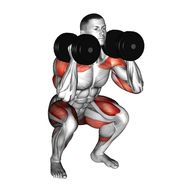
Dumbbell Hammer Curl to Lunge to Press
Muscle Groups: Quads, Biceps, Shoulders
Dumbbell Hammer Curl to Lunge to Press focuses on Quads, Biceps, Shoulders, with Glutes, Traps, Triceps, Hamstrings working as supporting muscles.
How to Perform
Follow these step-by-step instructions to perform Dumbbell Hammer Curl to Lunge to Press with proper form and technique.
- 1
Stand tall with your feet hip-width apart, holding a dumbbell in each hand with palms facing your body.
- 2
Keeping your elbows tucked, curl both dumbbells up towards your shoulders, squeezing your biceps at the top.
- 3
From this curled position, step forward with one leg into a lunge, lowering your hips until both knees are bent at approximately 90-degree angles.
- 4
Ensure your front knee is directly above your ankle and your back knee hovers just above the floor.
- 5
While in the lunge, press both dumbbells straight overhead until your arms are fully extended.
- 6
Lower the dumbbells back to your shoulders with control.
- 7
Push off your front foot to return to the standing position, simultaneously lowering the dumbbells back to your sides.
- 8
Repeat the entire sequence, stepping forward with the opposite leg for the lunge.
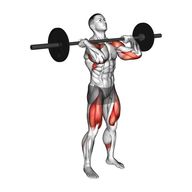
Secondary Muscles
While Dumbbell Hammer Curl to Lunge to Press primarily targets Quads, Biceps, Shoulders , this exercise also activates several secondary muscle groups during the movement. These supporting muscles include Glutes, Traps, Triceps, Hamstrings . Engaging these secondary muscles helps stabilize your body throughout the exercise, improves overall coordination, and contributes to balanced muscle development.
Related Exercises
If you enjoyed Dumbbell Hammer Curl to Lunge to Press, you might also want to try these related exercises that target similar muscle groups.
These exercises work the same primary muscles as Dumbbell Hammer Curl to Lunge to Press, making them excellent alternatives for variety in your training program or complementary movements to include in the same workout session. Mixing different exercises that target similar muscle groups helps prevent plateaus, reduces overuse injuries, and keeps your workouts engaging and effective.