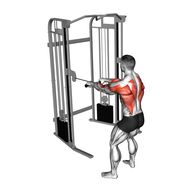
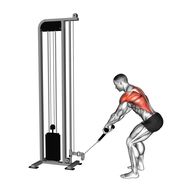
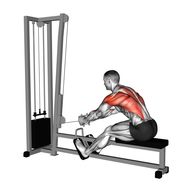
Single-arm Cable Row and Rotation
Muscle Groups: Lats, Traps
Single-arm Cable Row and Rotation focuses on Lats, Traps, with Shoulders, Chest, Biceps, Obliques working as supporting muscles.
How to Perform
Follow these step-by-step instructions to perform Single-arm Cable Row and Rotation with proper form and technique.
- 1
Stand facing a cable machine with a single-grip handle attached to a low or mid-level pulley. Position yourself slightly to the side of the cable, about an arm's length away.
- 2
Grab the handle with the hand furthest from the machine, keeping your feet shoulder-width apart and a slight bend in your knees. Your working arm should be fully extended towards the machine.
- 3
Engage your core and initiate the movement by pulling the handle towards your body, simultaneously rotating your torso away from the machine.
- 4
Continue pulling until your elbow is past your torso and your hand is near your rib cage, squeezing your shoulder blade towards your spine. Your chest should be facing mostly away from the machine.
- 5
Slowly reverse the movement, extending your arm and allowing your torso to rotate back to the starting position. Control the cable as it returns to the machine.
Secondary Muscles
While Single-arm Cable Row and Rotation primarily targets Lats, Traps , this exercise also activates several secondary muscle groups during the movement. These supporting muscles include Shoulders, Chest, Biceps, Obliques . Engaging these secondary muscles helps stabilize your body throughout the exercise, improves overall coordination, and contributes to balanced muscle development.
Related Exercises
If you enjoyed Single-arm Cable Row and Rotation, you might also want to try these related exercises that target similar muscle groups.
These exercises work the same primary muscles as Single-arm Cable Row and Rotation, making them excellent alternatives for variety in your training program or complementary movements to include in the same workout session. Mixing different exercises that target similar muscle groups helps prevent plateaus, reduces overuse injuries, and keeps your workouts engaging and effective.